

When shopping for premium knitwear, you've probably come across two popular natural fibers: cashmere and wool.
At first glance, they may seem similar—they're both soft, warm, and perfect for cooler weather. But once you wear them, the difference becomes obvious.
So, is cashmere really worth the investment? And when is wool the better choice?
In this guide, we'll compare cashmere and wool in terms of softness, warmth, breathability, durability, care, and overall value, helping you choose the fabric that best fits your lifestyle.
What Is Cashmere?
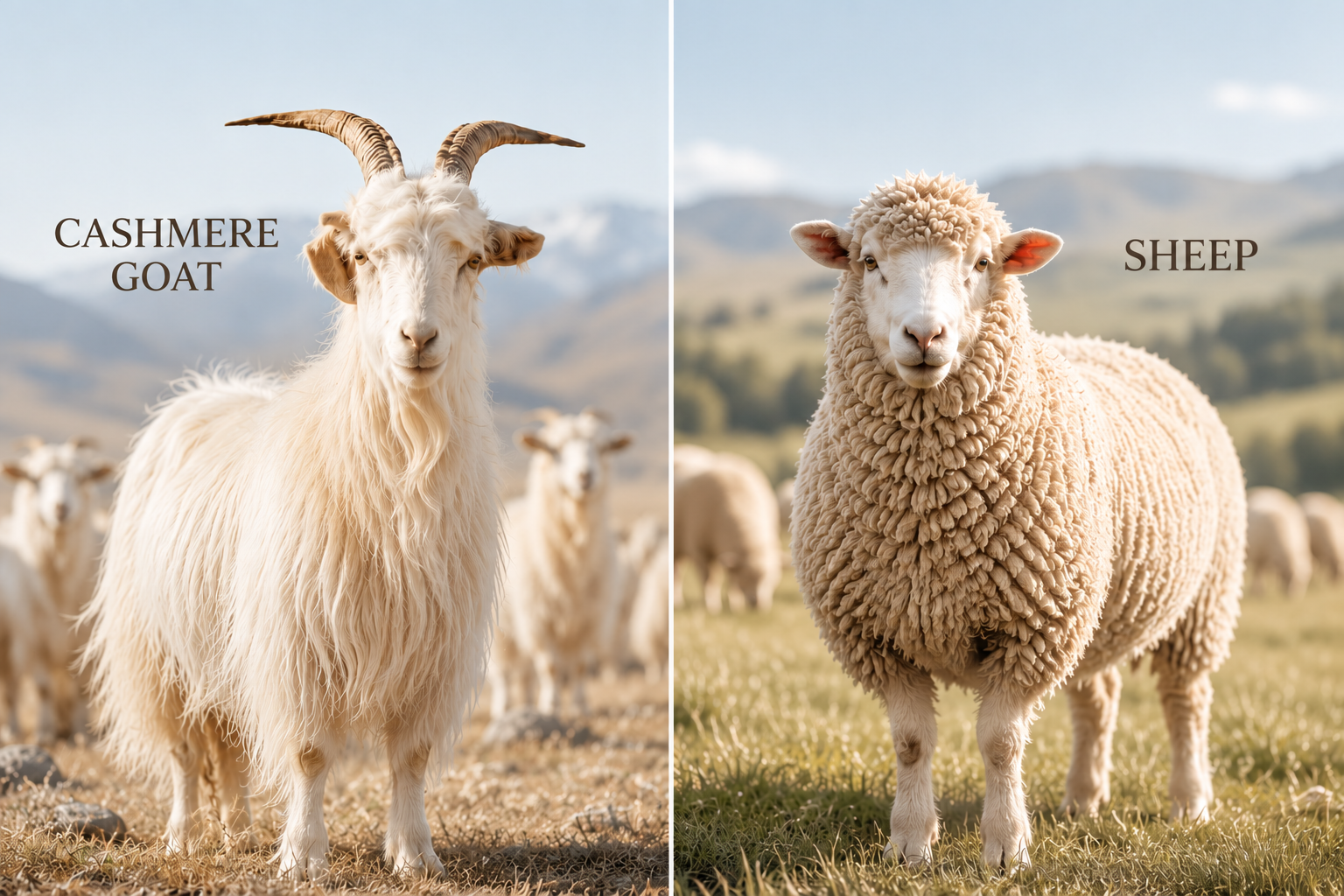
Cashmere is a premium natural fiber collected from the soft undercoat of cashmere goats, primarily raised in Mongolia and parts of Inner Asia. Each goat produces only a small amount of usable fiber every year, making cashmere one of the world's most exclusive natural textiles.
The finest cashmere fibers are incredibly soft, lightweight, and breathable, offering exceptional comfort without unnecessary bulk.
What Is Wool?
Wool is a natural fiber obtained from sheep. There are many different types of wool, ranging from coarse everyday wool to premium Merino wool.
Compared with cashmere, traditional wool generally has thicker fibers, making it more structured and durable. It's widely used in sweaters, coats, suits, and cold-weather clothing because of its excellent insulation and versatility.
Cashmere and Wool Sources
Although both are natural animal fibers, cashmere and wool come from different animals and require different harvesting methods.
Cashmere
- Comes from the soft undercoat of cashmere goats
- Mainly sourced from Mongolia, Inner Mongolia, China, Afghanistan, and Iran
- Goats naturally shed their undercoat each spring, and the fine fibers are carefully combed or collected by hand.
- Each goat produces only 150–200 grams of usable cashmere annually, making it a rare and valuable fiber.
Wool
- Comes from the fleece of sheep
- Produced in countries such as Australia, New Zealand, the United Kingdom, and China
- Sheep are shorn once or twice a year using electric clippers, allowing significantly larger fiber yields than cashmere.
- Different sheep breeds produce different types of wool, from everyday wool to fine Merino wool.
Because of these differences in sourcing and production, cashmere is considerably rarer than traditional wool, contributing to its premium value.
Cashmere vs Wool: Side-by-Side Comparison
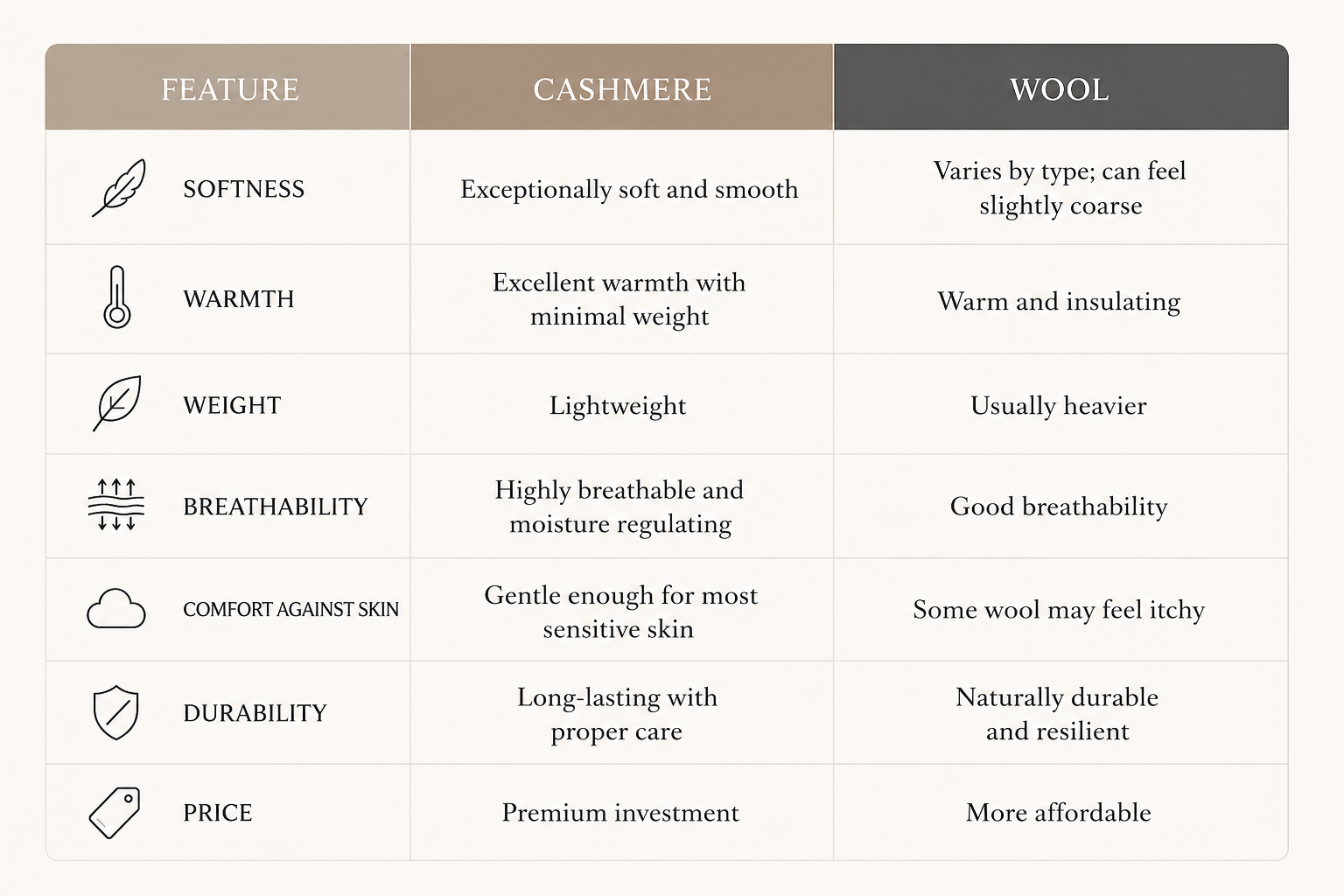
1. Softness: Cashmere Wins
The biggest difference most people notice is the feel.
Cashmere fibers are significantly finer than most traditional wool fibers, creating an incredibly smooth and luxurious texture. Instead of feeling rough or scratchy, quality cashmere feels almost cloud-like against the skin.
For people with sensitive skin, cashmere is often much more comfortable to wear directly against the body.
2. Warmth Without Bulk
Both wool and cashmere provide excellent insulation, but they achieve it differently.
Cashmere traps heat efficiently while remaining remarkably lightweight. This means you can stay warm without wearing thick, bulky layers.
Wool is also warm, but garments are typically heavier and may feel more substantial.
If you're looking for lightweight warmth for everyday wear or travel, cashmere offers a more refined experience.
3. Breathability for Everyday Comfort
Many people assume cashmere is only suitable for winter.
In reality, premium cashmere naturally regulates temperature by helping manage moisture and airflow. Lightweight cashmere knitwear can feel comfortable across multiple seasons, especially during cool mornings, air-conditioned environments, and transitional weather.
Wool is also breathable, though thicker wool garments tend to retain more heat.
4. Durability Depends on Quality
People often believe wool always lasts longer than cashmere.
The truth is that quality matters more than the fiber itself.
High-quality cashmere made from longer, finer fibers can remain beautiful for many years when cared for properly. Lower-quality cashmere, on the other hand, may pill more quickly.
Likewise, premium wool garments can also offer excellent longevity.
Proper washing, folding, and storage make a significant difference regardless of which fiber you choose.
5. Which Is Easier to Care For?
Neither material is difficult to maintain, but both benefit from gentle care.
For both cashmere and wool, it's best to:
- Hand wash or use a delicate cycle
- Wash with cold water
- Use a mild detergent
- Lay flat to dry
- Fold instead of hanging
- Store in a cool, dry place
With proper care, both fabrics can maintain their appearance season after season.
When Should You Choose Cashmere?
Cashmere is ideal if you value:
- Exceptional softness
- Lightweight warmth
- Everyday luxury
- Comfortable layering
- Timeless wardrobe essentials
- Premium natural fibers
It's an investment piece you'll reach for year after year.
When Should You Choose Wool?
Wool may be the better choice if you:
- Need highly durable everyday knitwear
- Prefer structured sweaters or outerwear
- Frequently wear clothing in very cold conditions
- Are shopping within a smaller budget
Wool remains one of the most practical natural fibers available.
Is Cashmere Worth the Price?
For many people, the answer is yes.
You're not simply paying for warmth—you're investing in a unique combination of softness, lightness, comfort, and craftsmanship that few natural fibers can match.
A well-made cashmere sweater can become one of the most versatile pieces in your wardrobe, offering timeless style and lasting comfort season after season.

Final Thoughts
Both cashmere and wool have their place in a well-rounded wardrobe.
If durability and affordability are your priorities, wool is an excellent option.
But if you're looking for unmatched softness, lightweight warmth, and everyday luxury, cashmere is difficult to surpass.
At CAKO, we believe exceptional knitwear begins with exceptional fibers. That's why we carefully source premium Mongolian cashmere and combine timeless design with expert craftsmanship to create pieces you'll enjoy for years to come.


