

What Makes Cashmere a Natural Fiber?
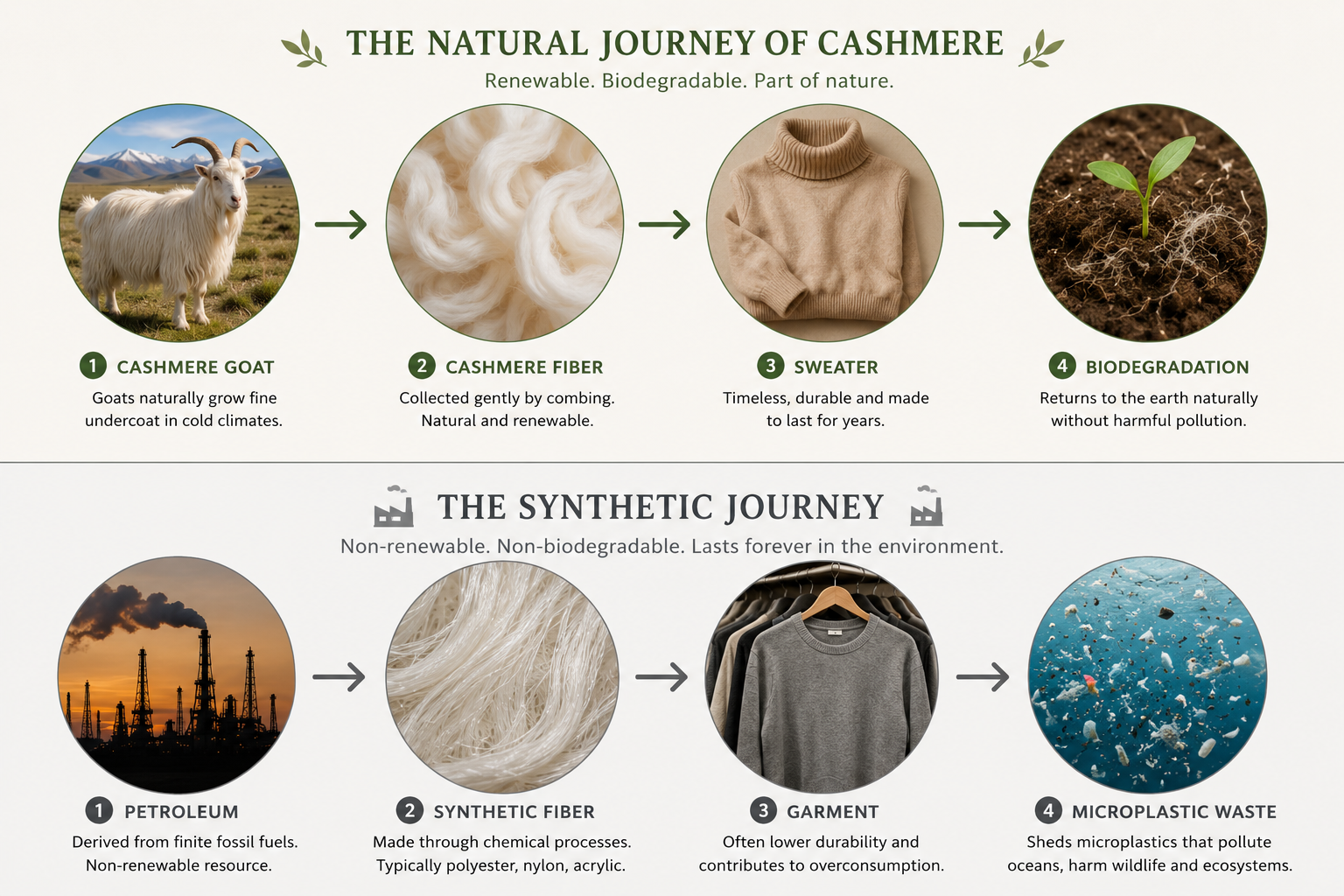
Cashmere comes from the soft undercoat of cashmere goats that live in some of the world's harshest climates, particularly in regions such as Inner Mongolia, Mongolia, and parts of Central Asia.
Each spring, goats naturally shed this fine undercoat as temperatures rise. The fibers are carefully collected and processed into yarn.
Unlike synthetic fibers such as polyester, acrylic, or nylon, cashmere is:
- Derived from a renewable natural source
- Biodegradable under proper conditions
- Free from petroleum-based raw materials
- Naturally insulating and breathable
Because it is a protein fiber, similar to wool, cashmere can eventually return to the earth without leaving microplastic pollution behind.
The Sustainability Advantages of Cashmere
1. Exceptional Longevity
One of the most overlooked aspects of sustainability is durability.
A high-quality cashmere garment can last for many years—or even decades—with proper care.
Fast-fashion garments are often worn only a handful of times before being discarded. In contrast, a well-made cashmere sweater may remain in regular use for years.
The longer a garment stays in your wardrobe, the lower its environmental impact per wear.
Cost Per Wear Example
| Garment | Price | Wears | Cost Per Wear |
|---|---|---|---|
| Fast Fashion Sweater | $40 | 2 | $20.00 |
| Quality Cashmere Sweater | $149 | 150+ | Under $1.00 |
Sustainability isn't only about production—it's also about consumption habits.
2. Natural Temperature Regulation
Cashmere offers an impressive warmth-to-weight ratio.
The fine fibers trap air efficiently, providing warmth without bulk.
This means cashmere can be worn across multiple seasons:
- Cool summer evenings
- Autumn layering
- Winter insulation
- Air-conditioned offices year-round
A versatile garment that works in different climates often replaces several less versatile pieces.
3. Biodegradability
Unlike synthetic materials, natural cashmere fibers break down over time.
When disposed of responsibly, cashmere does not contribute to the growing issue of microplastic pollution found in oceans, rivers, and even drinking water.
This characteristic makes cashmere significantly different from many synthetic knitwear alternatives.
The Challenges: Why Cashmere Has Faced Sustainability Criticism
To have an honest discussion, it's important to acknowledge the industry's challenges.
Demand for cashmere has increased dramatically over the past few decades.
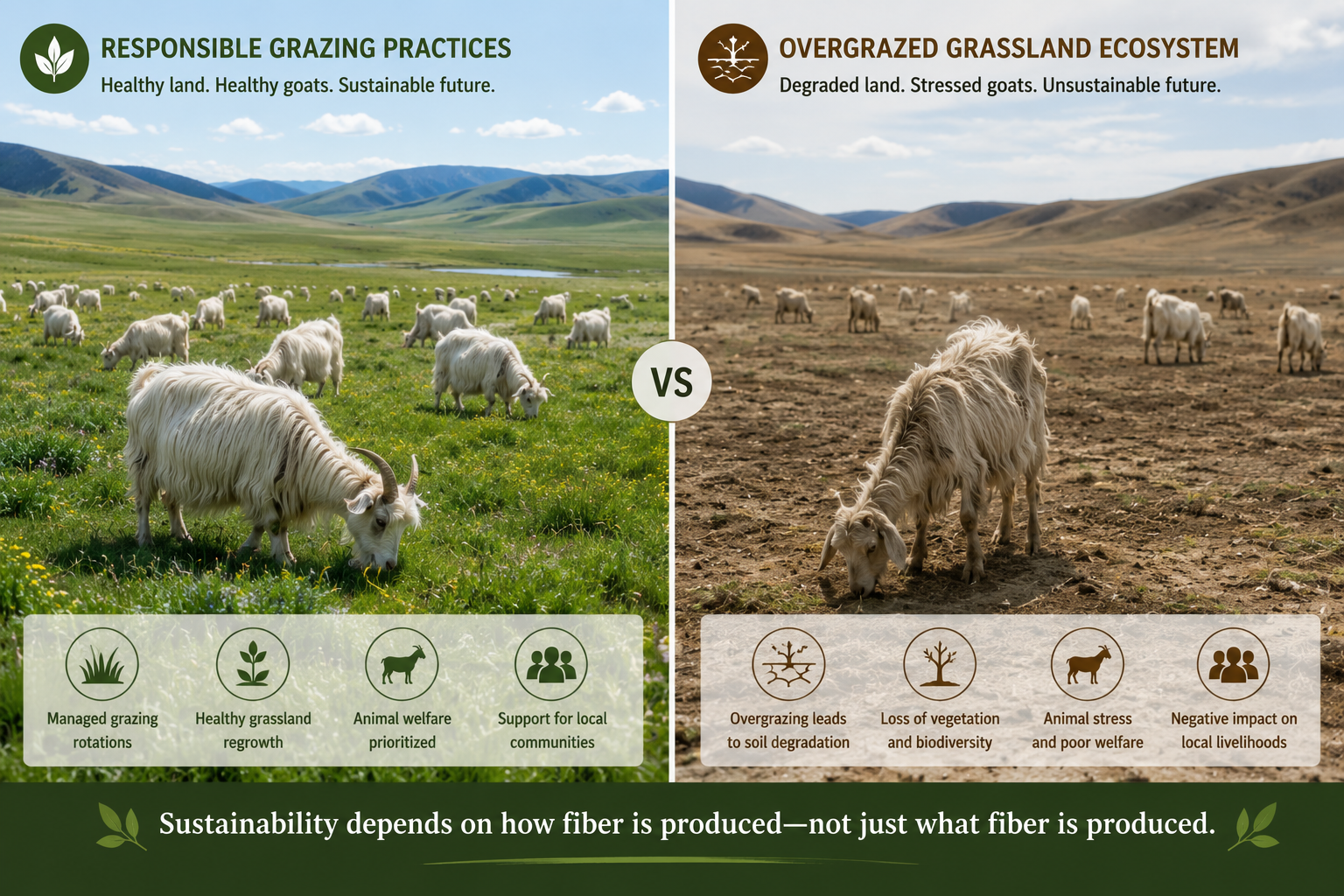
As global demand grew, some regions expanded goat populations beyond what local grasslands could comfortably support.
Potential consequences include:
- Overgrazing
- Soil degradation
- Desertification in vulnerable ecosystems
- Loss of biodiversity
These issues are not caused by cashmere itself, but by unsustainable land management practices.
Just as responsibly grown cotton differs from poorly managed cotton production, the sustainability of cashmere depends heavily on sourcing methods.
What Responsible Cashmere Sourcing Looks Like
Today, leading producers and brands are investing in more responsible sourcing standards.
Responsible cashmere production often includes:
Animal Welfare
- Humane treatment of goats
- Ethical fiber collection methods
- Healthy living conditions
Grassland Protection
- Controlled grazing practices
- Herd management programs
- Long-term ecosystem preservation
Traceability
- Transparent supply chains
- Verified fiber origins
- Partnerships with trusted herding communities
Quality Over Quantity
Higher-quality cashmere generally requires fewer fibers, lasts longer, and encourages a slower fashion mindset.
The goal is not simply producing more garments—but producing better garments.
Why Fiber Quality Matters for Sustainability
Interestingly, sustainability and quality are often connected.
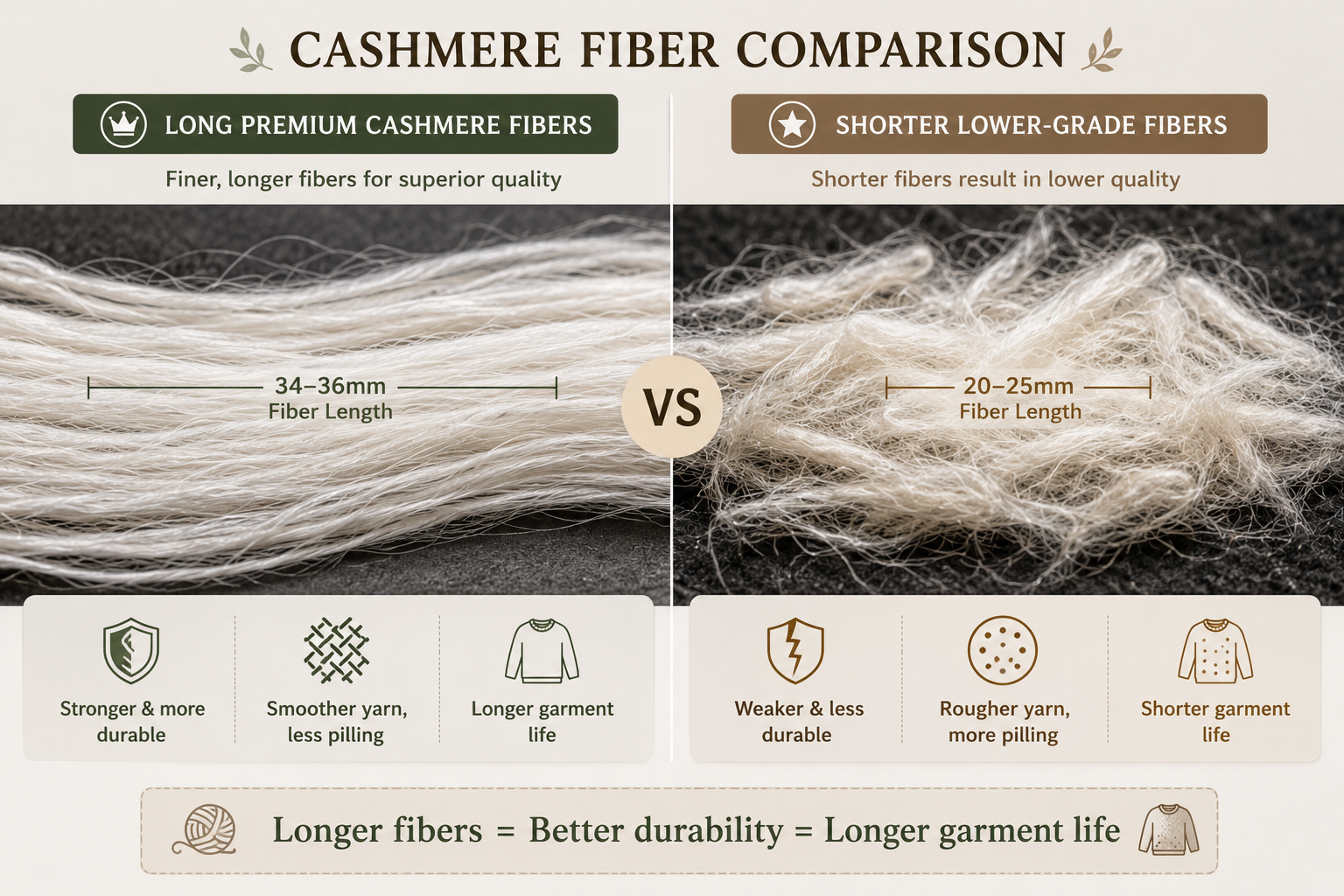
Premium cashmere fibers are typically:
- Finer
- Longer
- Stronger
Longer fibers create smoother yarns that are less prone to excessive pilling and wear.
A garment that maintains its appearance for years naturally reduces replacement frequency.
This is why investing in quality often has a lower environmental footprint than repeatedly replacing lower-quality alternatives.
A Smarter Way to Think About Sustainable Fashion
Rather than asking:
"Is this material sustainable?"
A better question may be:
"How was this garment made, and how long will I wear it?"
A responsibly sourced cashmere sweater that lasts ten years may have a smaller overall footprint than multiple lower-quality garments purchased and discarded during the same period.
Sustainability is not only about materials.
It is about longevity, craftsmanship, responsible sourcing, and mindful consumption.
CAKO's Approach to Cashmere
At CAKO, we believe sustainability begins with making garments people genuinely want to keep.
Our cashmere pieces are crafted from 100% Grade-A Mongolian cashmere, sourced from carefully selected regions known for producing exceptionally fine fibers.
Key specifications include:
- 15.8–16.2 micron fiber diameter
- 34–36mm fiber length
- Grade-A Mongolian cashmere
- Designed for long-term wear and timeless styling
Rather than chasing seasonal trends, we focus on creating versatile essentials that remain relevant year after year.
Because the most sustainable garment is often the one that stays in your wardrobe the longest.
Final Thoughts
Cashmere is neither inherently sustainable nor inherently unsustainable.
Its environmental impact depends on:
- How the goats are raised
- How the land is managed
- How the fiber is sourced
- How long the garment is worn
When responsibly sourced and thoughtfully produced, cashmere can be part of a more sustainable wardrobe—offering natural performance, longevity, and timeless appeal that stand apart from disposable fashion.
Choose better. Wear longer. Buy less, but better.
Less. Better. Forever.


