
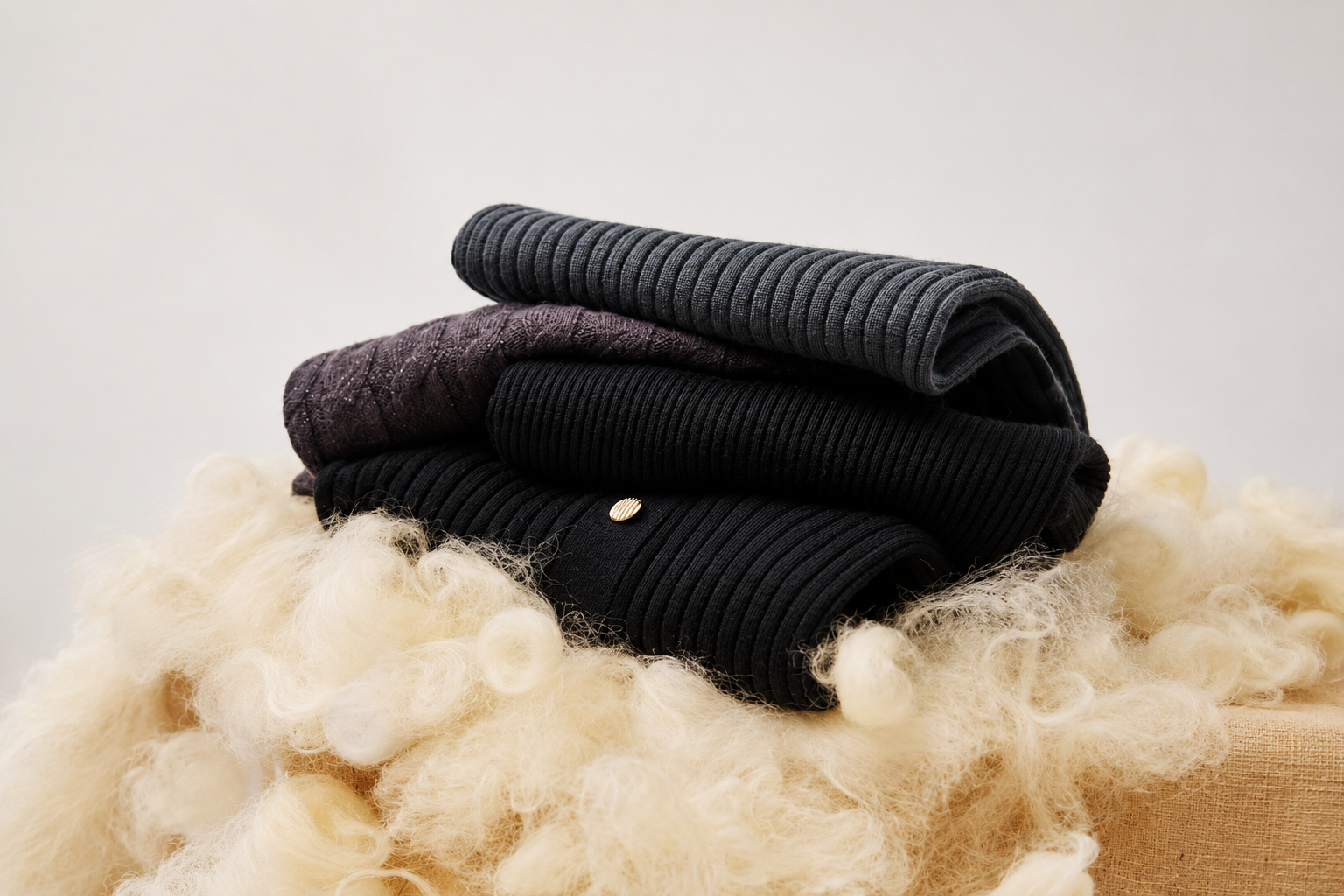
Not all cashmere is created equal. Understanding what defines a finer fiber can help you choose pieces that feel better, wear beautifully, and remain part of your wardrobe for years.
Cashmere is often associated with exceptional softness, warmth, and understated luxury. Yet two sweaters labeled “100% cashmere” can feel remarkably different.
The reason lies beyond the label.
The quality of cashmere depends on several factors, from the fineness and length of the fibers to how they are selected, spun, and knitted. Among the terms you may encounter when shopping for premium cashmere is Grade-A cashmere.
But what does Grade-A actually mean, and how can you recognize quality when choosing cashmere for yourself?
What Is Grade-A Cashmere?
Grade-A cashmere generally refers to finer, longer cashmere fibers selected for their softness and quality.
Cashmere comes from the soft undercoat of cashmere-producing goats. The fibers are carefully separated from the coarser outer hairs before being cleaned, sorted, and spun into yarn.
Higher-quality cashmere typically uses finer and longer fibers, which can contribute to a smoother hand feel, greater comfort, and better durability.
It is worth noting that “Grade-A” is not governed by one universal grading system used identically by every producer. Rather than relying on the term alone, it is helpful to understand the characteristics behind it.
For a well-made cashmere piece, the quality of the fiber is only the beginning.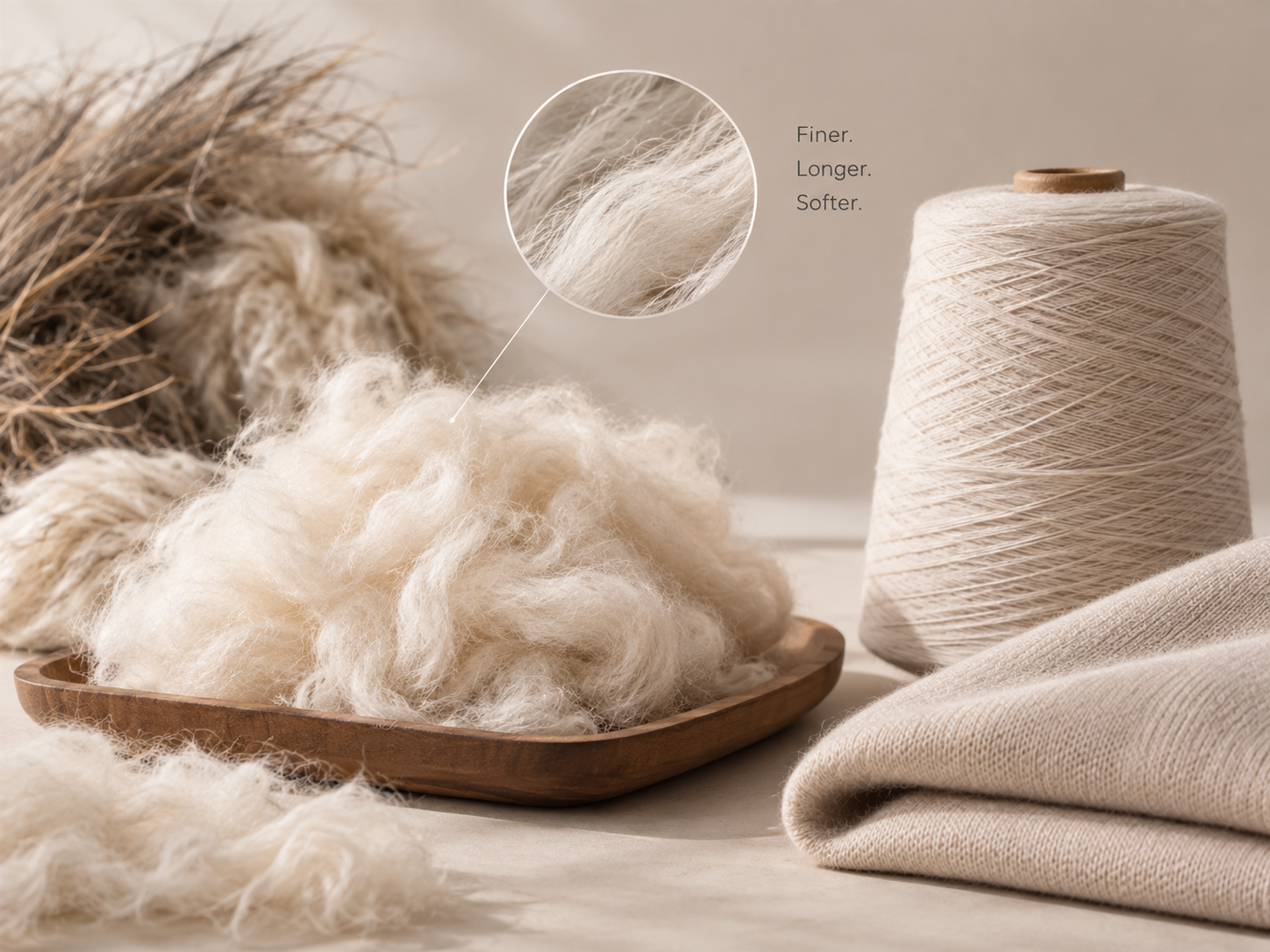
What Actually Determines Cashmere Quality?
When evaluating cashmere, several elements work together.
Fiber fineness plays an important role in how cashmere feels against the skin. Finer fibers tend to create the exceptionally soft, smooth sensation associated with premium cashmere.
Fiber length matters as well. Longer fibers can be spun into stronger, more stable yarns, helping a garment maintain its appearance over time and reducing the tendency for loose fibers to work their way to the surface.
But fiber quality alone does not determine the finished garment. Yarn construction, knitting technique, finishing, and overall craftsmanship all influence how a cashmere piece feels and performs.
True quality is found in the balance between fiber, construction, and finishing.
Why Fiber Length and Fineness Matter
The beauty of premium cashmere is often something you can feel before you can see it.
Fine fibers create softness without requiring excessive surface fluff. Longer fibers, meanwhile, help form a more cohesive yarn.
This distinction is important because an extremely fluffy sweater is not necessarily a sign of superior cashmere. Sometimes, an exaggerated fuzzy surface can come from shorter fibers that have been heavily brushed during finishing.
Quality cashmere often feels more refined: soft and comfortable, yet substantial enough to hold its shape.
Over time, this becomes even more important. While some pilling is natural with cashmere—especially in areas exposed to friction—well-selected fibers and thoughtful construction can help a garment age more gracefully.
Does the Origin of Cashmere Matter?
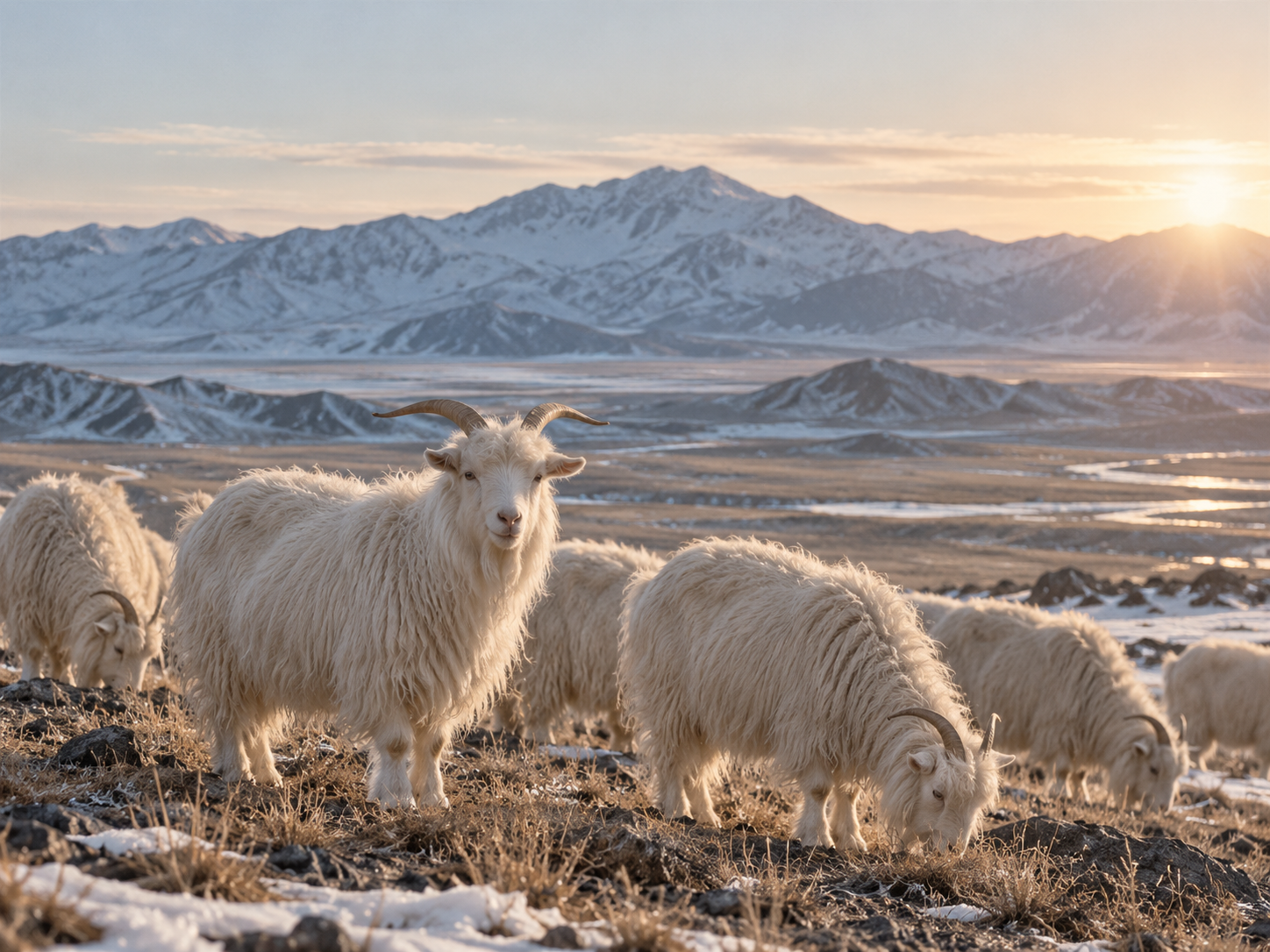
Cashmere-producing goats live in several regions of the world, but Mongolia and Inner Mongolia are particularly well known for cashmere production.
The region’s dramatic seasonal temperatures encourage goats to develop a fine, insulating undercoat that protects them through cold winters. These soft fibers are collected and eventually transformed into cashmere yarn.
Origin, however, should not be treated as a guarantee of quality on its own.
Two cashmere garments from the same region may still differ significantly depending on fiber selection, sorting, spinning, knitting, and finishing.
Think of origin as part of the story—not the entire definition of quality.
How Should Quality Cashmere Feel?
When you first touch a cashmere sweater, softness is naturally the first thing you notice. But there are other qualities worth paying attention to.
Good cashmere should feel soft, smooth, and comfortable rather than overly slippery or artificially fluffy. The knit should appear even and consistent, with enough structure to recover gently after being stretched.
You can also look closely at the surface. A slight natural halo is normal, but excessive loose fuzz on a new garment is not necessarily an indication of higher quality.
Most importantly, consider how the garment feels when worn. Premium cashmere should offer warmth without unnecessary weight, softness without fragility, and comfort that feels effortless rather than exaggerated.
How to Recognize Quality Cashmere When Shopping
A label can tell you the fiber content, but it cannot tell the whole story.
Start by checking whether the garment is 100% cashmere or a blend. Neither is automatically better for every purpose, but the distinction helps you understand what you are buying.
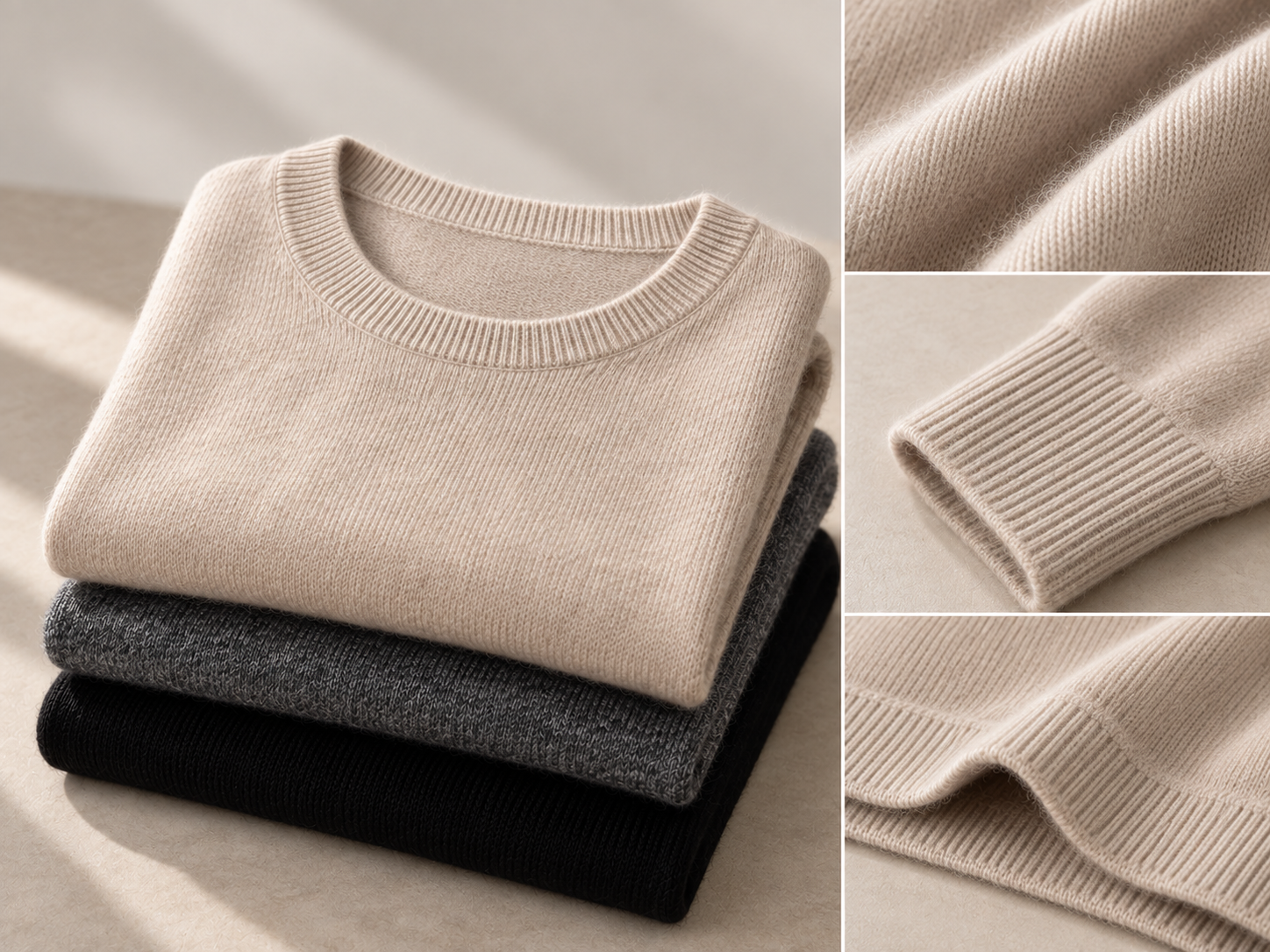
Then consider the fabric itself. Look for an even knit, a refined surface, and a hand feel that is soft but not excessively fuzzy.
Construction matters too. Examine the neckline, cuffs, seams, and hem. These quieter details often reveal how thoughtfully a garment has been made.
Finally, consider the design.
Exceptional cashmere should not only feel beautiful on the first wear. It should be something you genuinely want to reach for season after season. A timeless silhouette, versatile color, and comfortable fit can be just as important as the fiber itself.
Beyond the Grade
“Grade-A” can be a useful starting point when understanding cashmere, but quality should never be reduced to a single term.
The finest cashmere pieces bring together carefully selected fibers, thoughtful construction, refined finishing, and design that remains relevant beyond one season.
At CAKO, our approach begins with carefully selected cashmere, including Grade-A Mongolian cashmere used across our collection. From fiber selection to the finished garment, we focus on softness, comfort, craftsmanship, and enduring design.
Because truly good cashmere is not defined only by how luxurious it feels today.
It is defined by how naturally it becomes part of the way you live—and how beautifully it continues to wear over time.
Explore the CAKO Cashmere Collection →Cashmere Collections


