1. Linen Is Made from Flax Plant Fibers
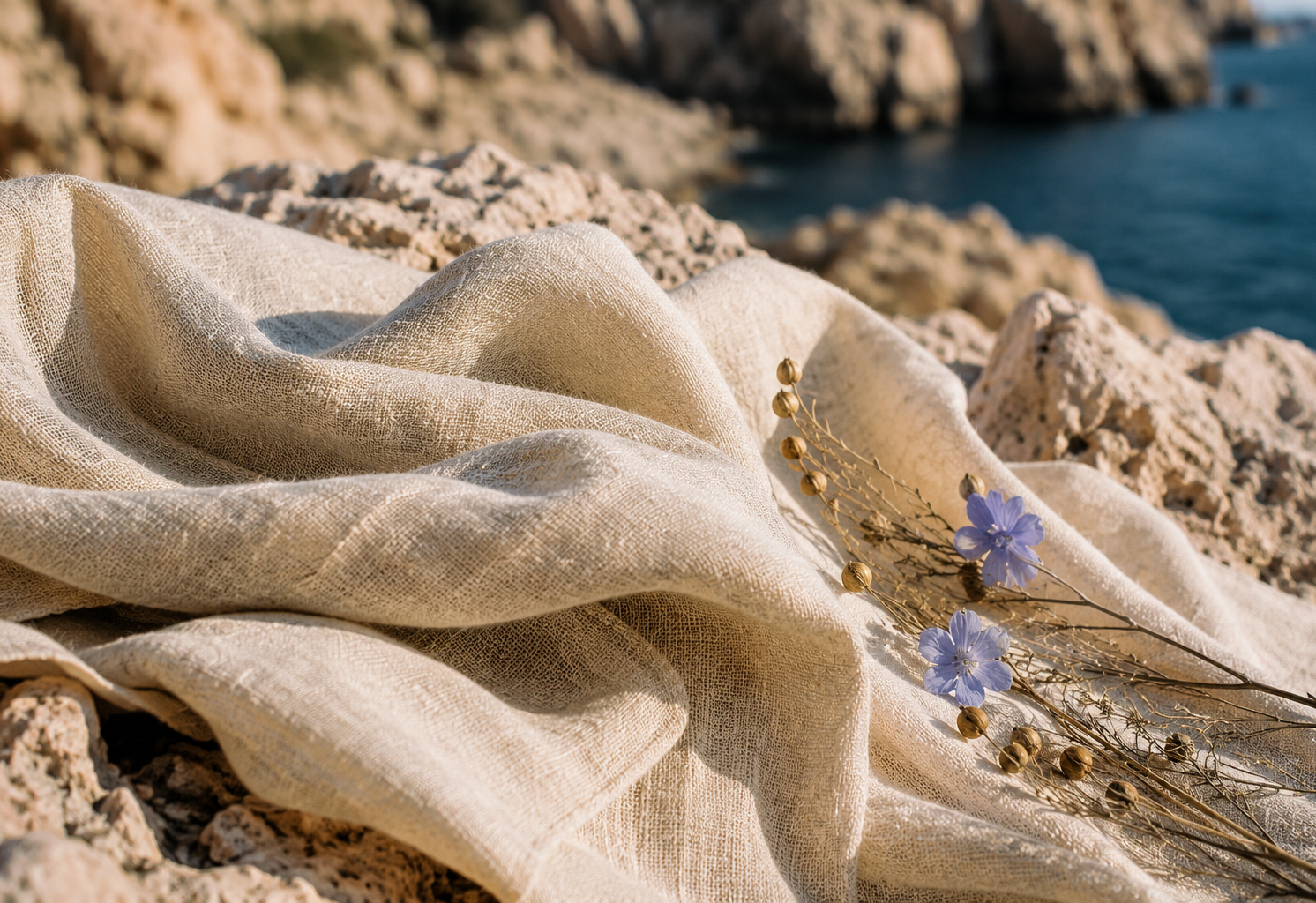
Linen is made from the fibers of the flax plant (Linum usitatissimum), specifically from the plant’s stalk. This is a natural, plant-based fiber that has been used for over 10,000 years, making it one of the oldest textiles in human history.
Unlike synthetic fabrics such as polyester, linen contains no plastic-based materials. It is also different from animal fibers like wool or silk. Linen is 100% biodegradable and is considered one of the most sustainable fabrics available today.
2. Linen Originated Over 10,000 Years Ago in Ancient Civilizations
Linen production dates back to at least 8,000–10,000 BCE, with strong evidence found in ancient Mesopotamia and Egypt. In ancient Egypt (around 3,000 BCE), linen was widely used for clothing and burial rituals. Egyptian mummies were wrapped in linen due to its purity and durability.
Today, about 80% of the world’s high-quality flax is grown in Western Europe, especially in France, Belgium, and the Netherlands, where the climate is ideal for fiber strength and consistency.
3. Linen Production Requires a Multi-Step, Labor-Intensive Process
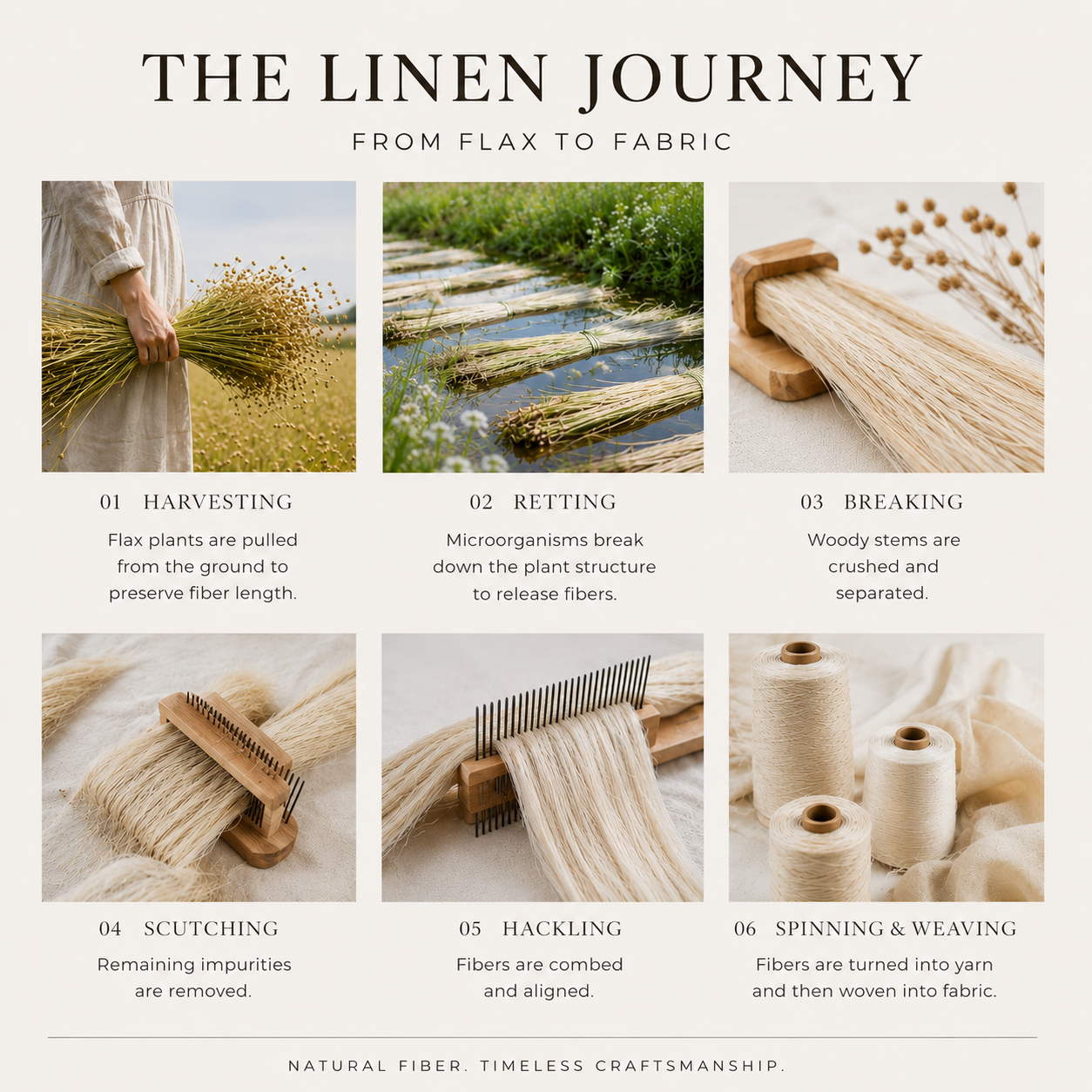
Linen fabric is produced through a complex process that includes six key steps:
- Harvesting: Flax plants are pulled from the ground to preserve fiber length
- Retting: Microorganisms break down the plant structure to release fibers
- Breaking: Woody stems are crushed and separated
- Scutching: Remaining impurities are removed
- Hackling: Fibers are combed and aligned
- Spinning & Weaving: Fibers are turned into yarn and then fabric
This process takes several weeks and requires significantly more labor than cotton production, which explains why linen is typically 20–30% more expensive than cotton fabrics.
4. Linen Is More Breathable and Stronger Than Cotton
Linen fibers are approximately 30% stronger than cotton fibers, making linen garments more durable over time. Linen can absorb up to 20% of its weight in moisture before feeling damp, which makes it ideal for hot and humid climates.
Additionally, linen has a natural hollow fiber structure that allows better airflow, improving breathability compared to cotton and synthetic fabrics.
5. Linen Is One of the Most Sustainable Fabrics in the World
Flax cultivation requires significantly less water than cotton—up to 60% less in many cases. It can grow in poor soil conditions and typically requires fewer pesticides and fertilizers.
Almost every part of the flax plant is used:
- Fibers → textile production
- Seeds → flaxseed oil and food products
- Byproducts → paper and insulation materials
Because of this zero-waste potential, linen is widely considered an eco-friendly textile.
6. Linen Is Commonly Used in Both Fashion and Home Textiles
Linen is widely used across multiple industries due to its durability and comfort.
In fashion:
- Shirts, dresses, pants, and summer suits
- Lightweight and breathable garments for warm weather
In home textiles:
- Bedsheets and pillowcases
- Tablecloths and napkins
- Curtains and upholstery
Linen products are especially popular in regions with hot climates, including Southern Europe and Southeast Asia.
7. Linen Wrinkles Easily Due to Its Natural Fiber Structure
Linen wrinkles more easily than cotton because it has low elasticity. The fibers do not stretch significantly, so they tend to hold creases after bending or folding.
However, this wrinkled texture is often considered a signature aesthetic of linen, associated with a relaxed and natural lifestyle.
8. Linen Typically Costs More Due to Limited Supply and Complex Processing
Linen is generally more expensive than cotton because:
- Flax fiber extraction is difficult and time-consuming
- The yield per plant is relatively low
- Production is concentrated in limited geographic regions
- Processing requires skilled labor
Despite the higher upfront cost, linen garments often last longer than cotton, making them more cost-effective over time.
Final Answer
Linen is made from the natural fibers of the flax plant, specifically its stalk, and has been used for over 10,000 years due to its strength, breathability, and sustainability.


