
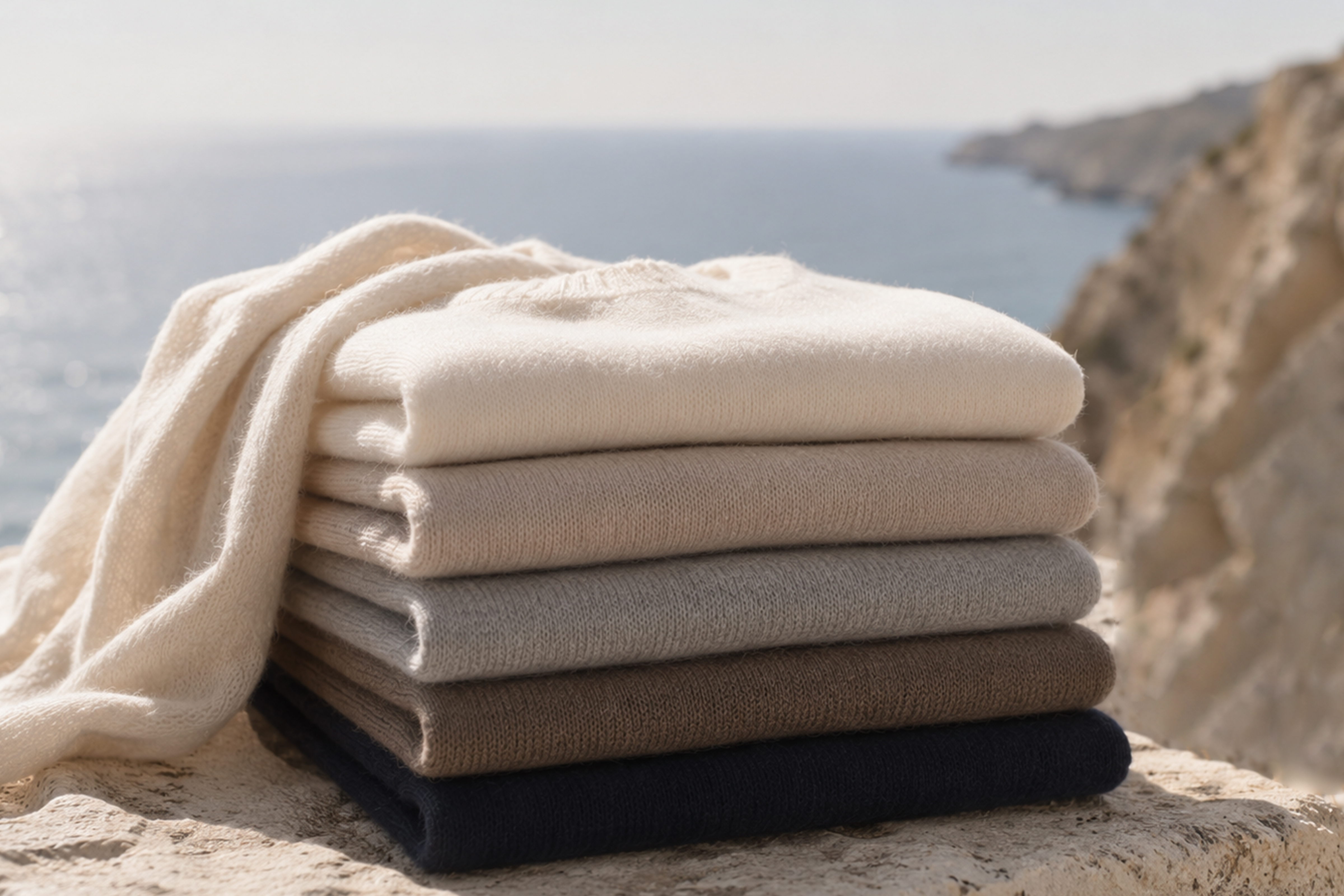
Cashmere has long been associated with luxury. Its exceptional softness, lightweight warmth, and timeless elegance make it one of the world's most sought-after natural fibers.
But if you've ever compared a cashmere sweater with one made from wool or cotton, you've probably wondered:
Why is cashmere so expensive?
The answer isn't simply branding or fashion. Genuine cashmere costs more because it is naturally rare, labor-intensive to produce, and exceptionally difficult to replace with any other fiber.
Let's take a closer look at what makes cashmere one of the finest—and most valuable—materials in the world.
Cashmere Is Naturally Rare
Unlike sheep, which can produce large quantities of wool each year, cashmere goats grow only a soft undercoat to protect themselves during extremely cold winters.
Each spring, as temperatures rise, this fine undercoat is carefully combed by hand during the goats' natural molting season.
After removing the coarser guard hairs and impurities, only a small amount of usable fiber remains.
On average, one goat produces only around 150–200 grams of finished cashmere each year—roughly enough for one lightweight sweater.
This limited natural supply is one of the biggest reasons cashmere commands a premium price.
Every Fiber Is Collected by Hand
Harvesting cashmere is a slow and highly skilled process.
Rather than being sheared like sheep, cashmere goats are gently combed to collect only the soft undercoat while leaving the protective outer hair behind.
This method:
- Protects the delicate fibers
- Preserves fiber length
- Produces higher-quality cashmere
- Helps reduce damage to the fleece
Because the process cannot be fully automated, it requires significant time and manual labor every season.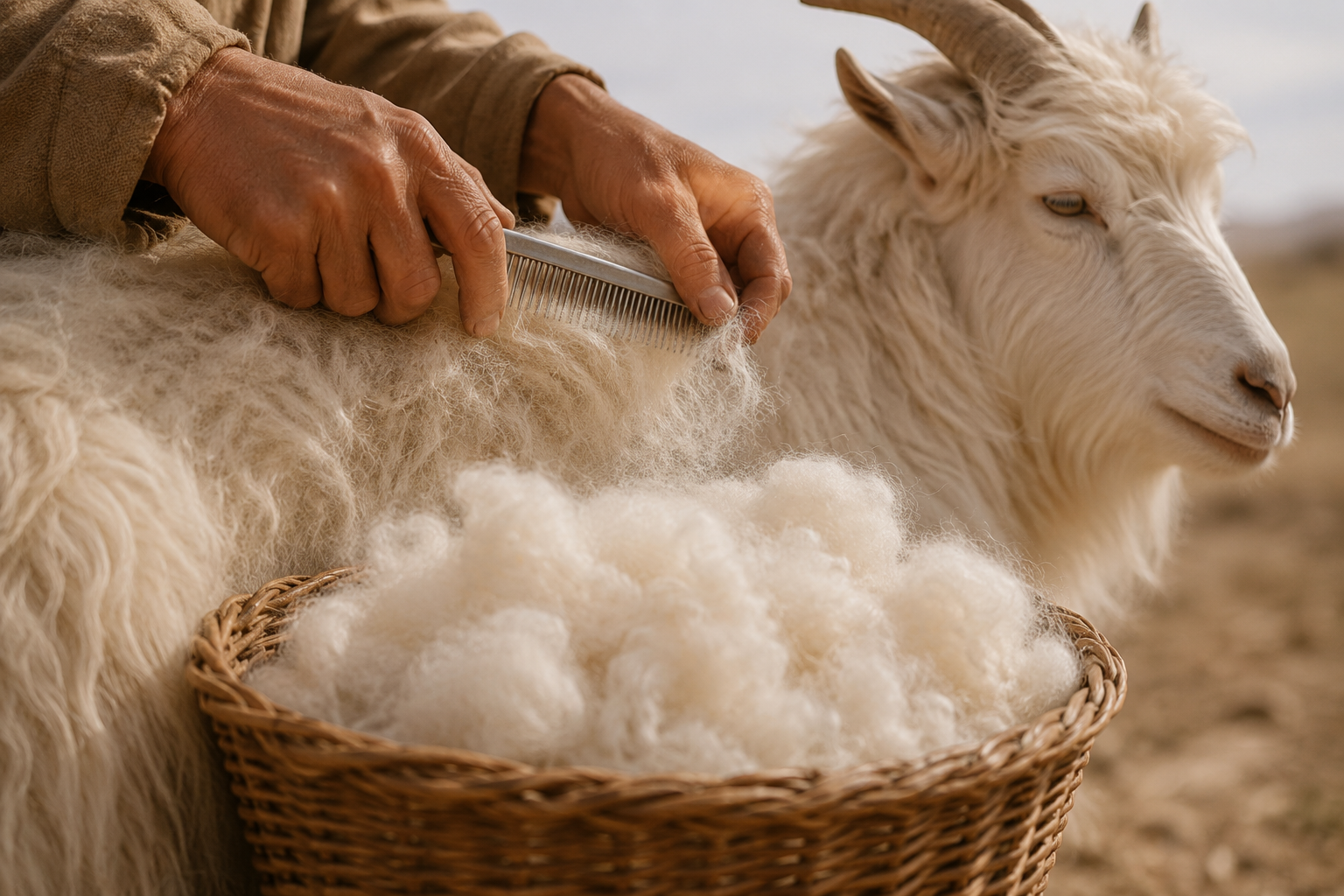
Only the Finest Fibers Are Selected
Not all cashmere is created equal.
Premium cashmere is evaluated based on several factors, including:
- Fiber diameter
- Fiber length
- Softness
- Color consistency
- Purity
The finest cashmere fibers are exceptionally thin—typically around 15–16 microns in diameter—making them incredibly soft against the skin while remaining naturally lightweight.
Longer fibers also help reduce pilling and improve durability, allowing high-quality garments to maintain their appearance for years with proper care.
Producing Cashmere Requires Exceptional Craftsmanship
Transforming raw cashmere into luxurious knitwear involves far more than simply spinning yarn.
The fibers must be:
- Carefully cleaned
- Dehaired to remove coarse fibers
- Sorted by quality
- Spun into fine yarn
- Knitted with precision
- Washed and finished to enhance softness
Every step influences the final feel, appearance, and longevity of the garment.
Experienced craftsmanship plays a major role in producing cashmere that feels smooth, refined, and beautifully balanced.
Cashmere Offers More Warmth with Less Weight
One reason people continue investing in cashmere is its remarkable comfort.
Its fine fibers naturally trap air, creating excellent insulation without unnecessary bulk.
Compared with many traditional wool garments, premium cashmere feels:
- Softer
- Lighter
- More breathable
- Less bulky
- Comfortable across a wider range of temperatures
This unique combination of warmth and lightness is difficult to replicate with other natural fibers.
A Well-Made Cashmere Sweater Can Last for Years
While cashmere may have a higher upfront cost, quality pieces are designed to be worn season after season.
With proper care, premium cashmere can retain its softness, shape, and appearance for many years.
Rather than being a fast-fashion purchase, it becomes a wardrobe staple that continues to offer comfort and versatility over time.
For many people, this long-term value helps justify the initial investment.
Why Do Some Cashmere Sweaters Cost Much More Than Others?
If all cashmere comes from goats, why can prices vary so dramatically?
Several factors influence the cost:
- Fiber quality and fineness
- Country of origin
- Dehairing and processing standards
- Yarn quality
- Knitting techniques
- Garment construction
- Brand positioning
Lower-priced cashmere may use shorter or coarser fibers, lower yarn density, or blends with other materials.
Higher-quality cashmere generally feels softer, pills less, and maintains its shape better over time.
Is Cashmere Worth the Price?
For many people, the answer is yes.
A high-quality cashmere garment offers a combination of softness, warmth, breathability, and timeless style that few other materials can match.
Rather than buying multiple seasonal sweaters, many choose to invest in one beautifully made cashmere piece that can be worn and enjoyed for years.
When chosen carefully and cared for properly, cashmere becomes more than just clothing—it becomes a lasting part of your wardrobe.
Final Thoughts
Cashmere is expensive because every stage of its journey—from the rare fibers produced by each goat to the skilled craftsmanship required to create a finished garment—demands time, expertise, and exceptional materials.
Its price reflects not only scarcity but also comfort, durability, and enduring quality.
For those who appreciate natural luxury and thoughtful craftsmanship, cashmere is an investment that continues to reward every time it is worn.


