

Cashmere has long been associated with luxury.
Softness. Warmth. Effortless elegance.
But if you’ve ever touched two “100% cashmere” sweaters side by side, you may have noticed something surprising:
One feels incredibly soft, light, and refined.
The other feels rougher, heavier, or starts pilling after only a few wears.
So what creates the difference?
The answer lies far beyond the label.
1. Fiber Thickness Changes Everything
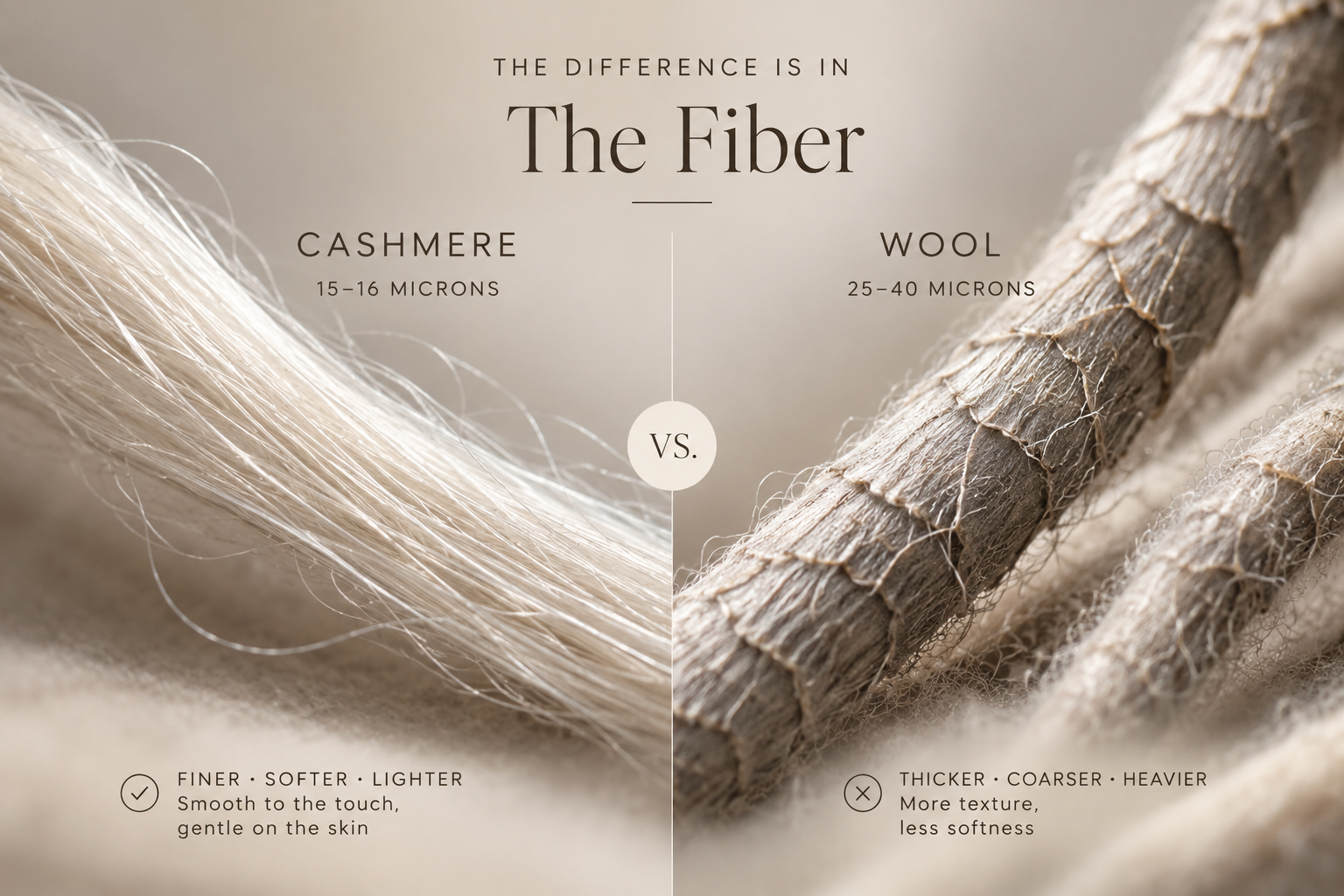
The first thing that determines the quality of cashmere is fiber diameter — often measured in microns.
High-grade Mongolian cashmere fibers are incredibly fine, typically around 15–16 microns in diameter.
For comparison, human hair is roughly 70 microns thick.
The finer the fiber:
-
the softer the touch
-
the smoother the drape
-
the lighter the feel against the skin
Lower-grade cashmere often uses thicker fibers, which can feel rougher or less breathable over time.
2. Longer Fibers Mean Less Pilling
One of the biggest misconceptions about cashmere is that pilling automatically means poor care.
In reality, pilling often starts with fiber length.
Shorter fibers are more likely to loosen, tangle, and rise to the surface during wear.
Longer fibers stay more stable inside the yarn structure.
That’s why premium cashmere typically:
-
pills less
-
maintains shape longer
-
feels smoother over time
Luxury cashmere isn’t only softer on day one — it ages more beautifully.
3. Good Cashmere Often Feels Lighter, Not Heavier
Many people assume heavier knitwear equals higher quality.
But exceptional cashmere behaves differently.
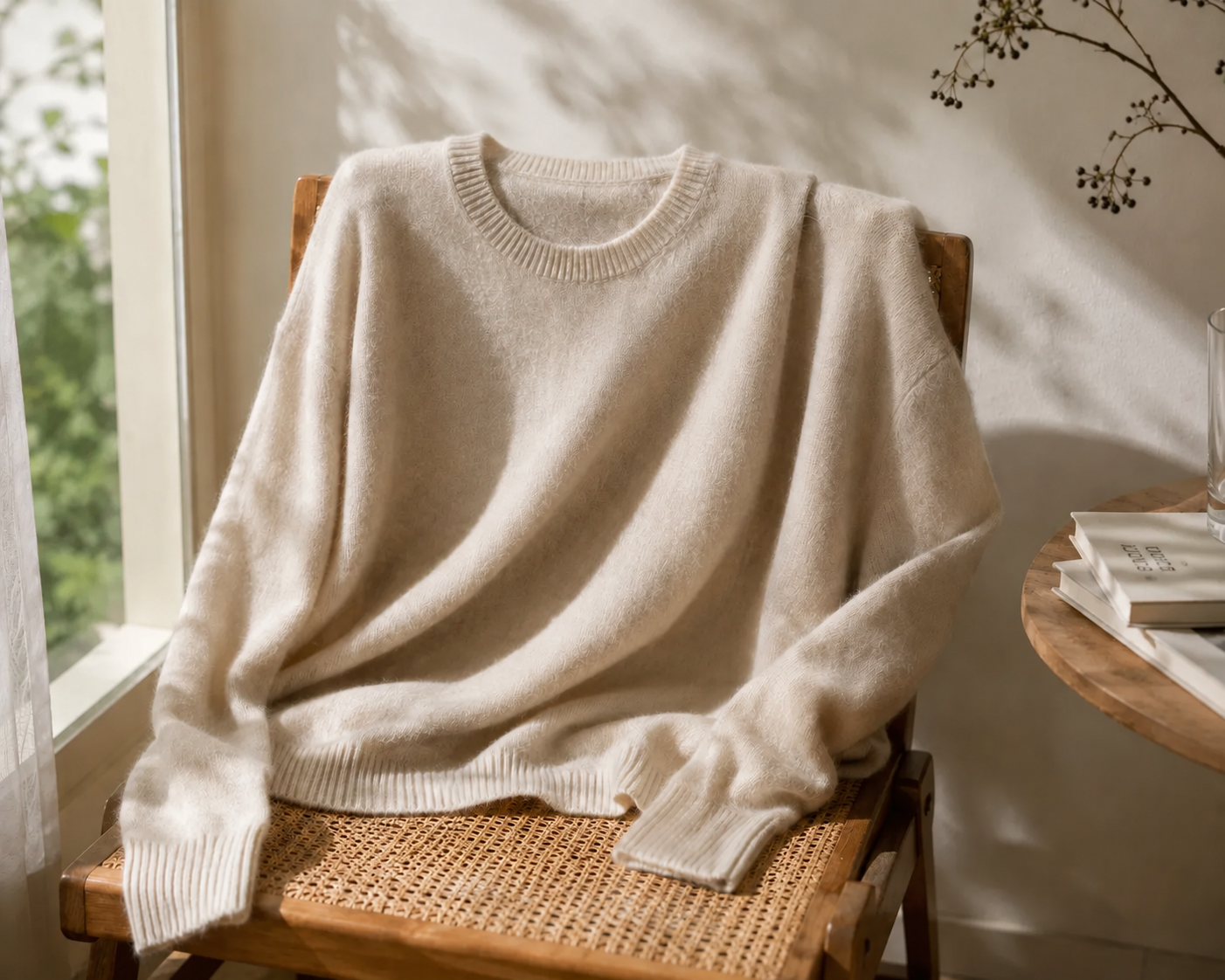
Because high-quality fibers trap warmth efficiently, luxury cashmere can feel surprisingly lightweight while still providing warmth and insulation.
This is why some of the world’s finest cashmere sweaters feel almost weightless when worn.
Softness is not about thickness.
It’s about fiber quality.
4. Yarn Spinning And Knitting Matter More Than Most People Think
Even the best raw fibers can lose their beauty through poor processing.
The spinning process affects:
-
softness
-
durability
-
elasticity
-
resistance to pilling
Meanwhile, knitting tension and finishing techniques determine whether a sweater feels refined or bulky.
Fast-fashion cashmere is often produced at high speed and large volume.
Luxury cashmere production tends to focus on slower finishing, smaller batches, and more precise craftsmanship.
The difference is subtle at first touch — but obvious after months of wear.
5. Why Luxury Cashmere Feels Different
True luxury in cashmere does not come from oversized logos.
It comes from:
-
finer fibers
-
longer staple length
-
careful yarn construction
-
thoughtful finishing
-
timeless design
The best cashmere pieces are designed to be worn for years, not just seasons.
They become softer with time.
They move naturally with the body.
They remain elegant without trying too hard.

Our Perspective
At CAKO, we believe cashmere should feel quiet, effortless, and lasting.
That’s why we focus on:
-
carefully selected natural fibers
-
refined lightweight construction
-
timeless silhouettes
-
smaller, more thoughtful production
Because true luxury is not about excess.
It’s about choosing fewer pieces — and choosing better ones.


