
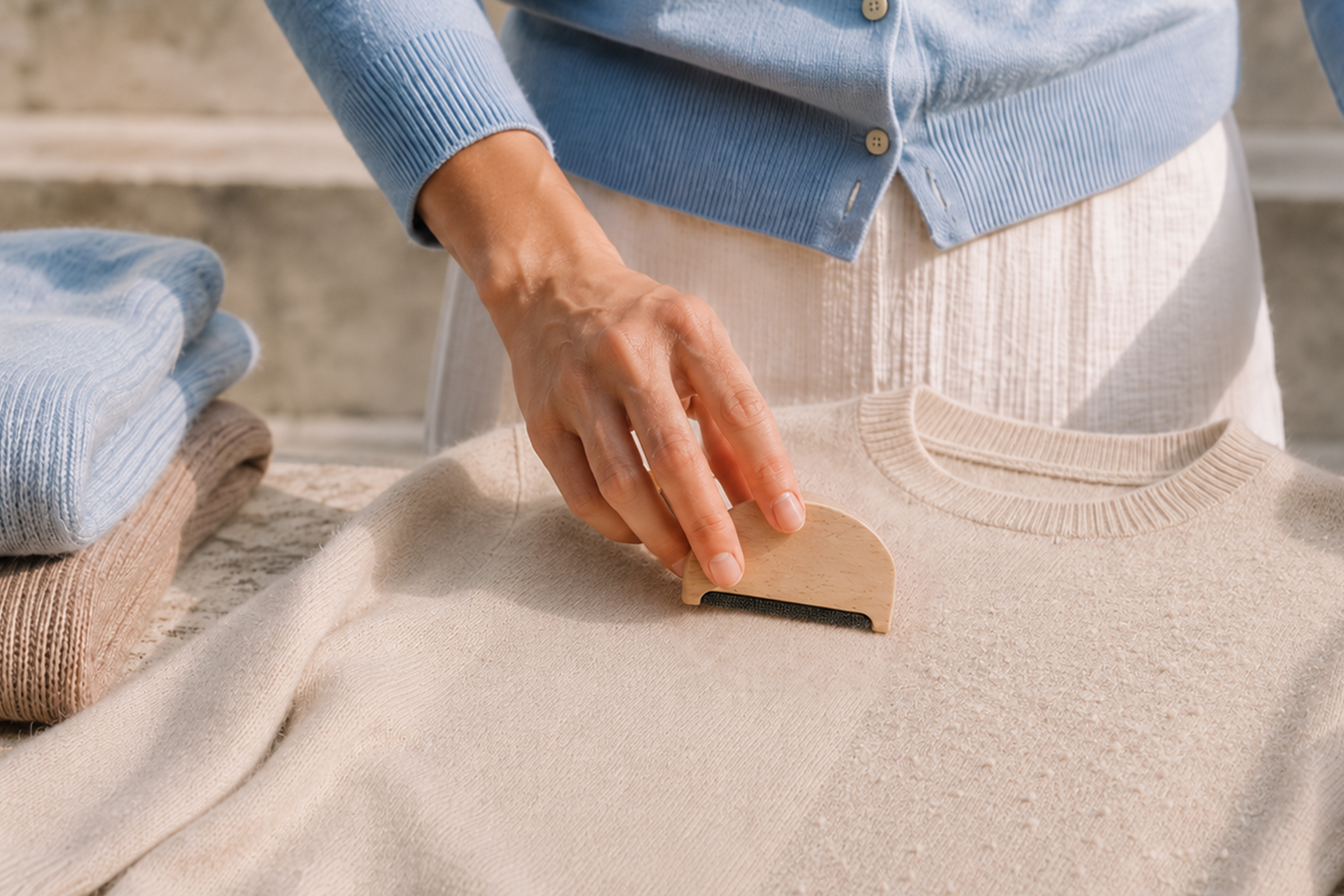
Why Does Cashmere Pill?
Pilling occurs when loose fibers on the surface of a garment become tangled together through friction.
Common sources of friction include:
- Wearing a shoulder bag
- Crossing your arms frequently
- Desk work and leaning on tables
- Layering under coats and jackets
- Washing and drying
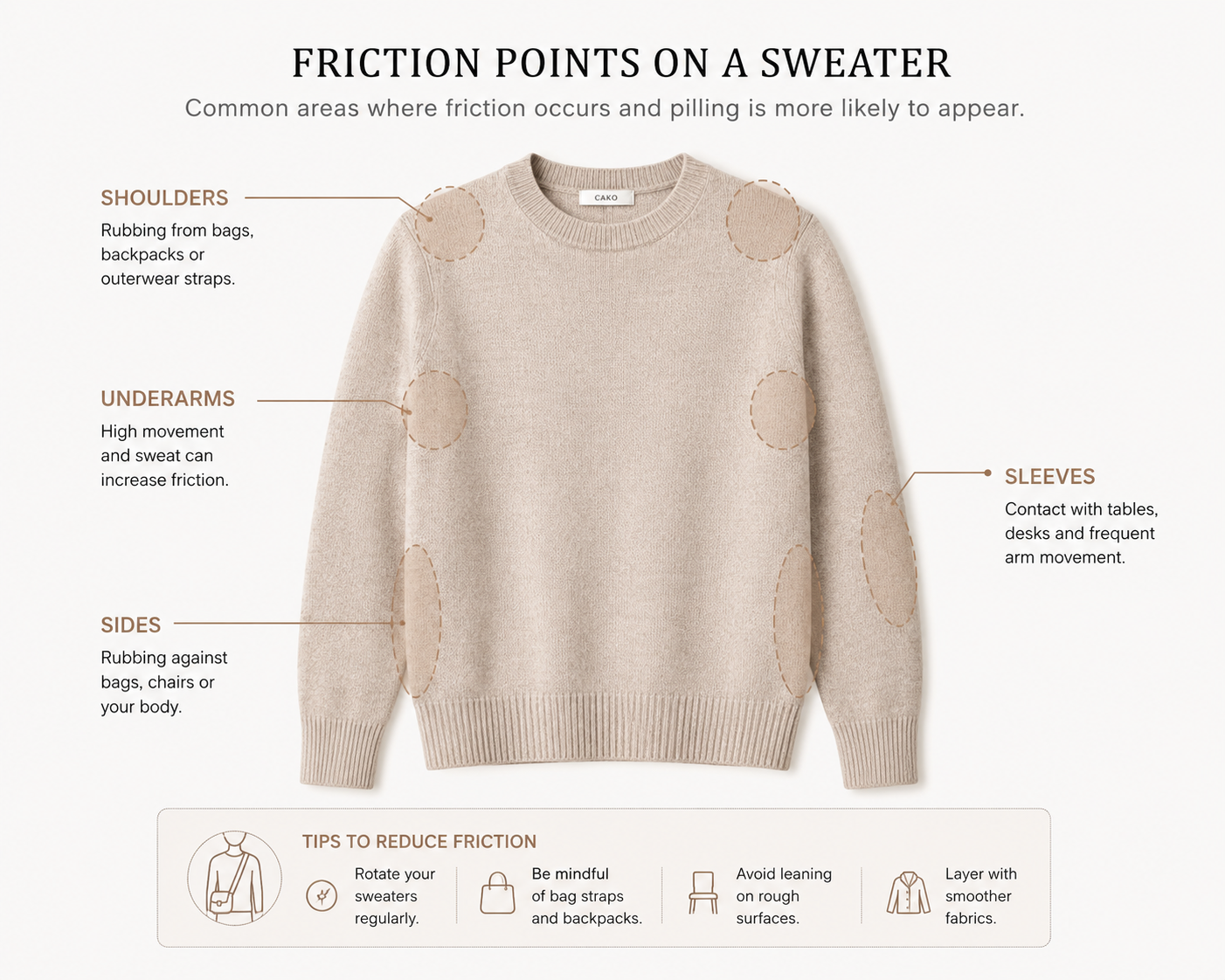
Even the softest cashmere fibers can work their way out of the yarn structure and form tiny balls on the fabric surface.
The Biggest Factor: Fiber Length
When it comes to pilling, fiber length matters more than most people realize.
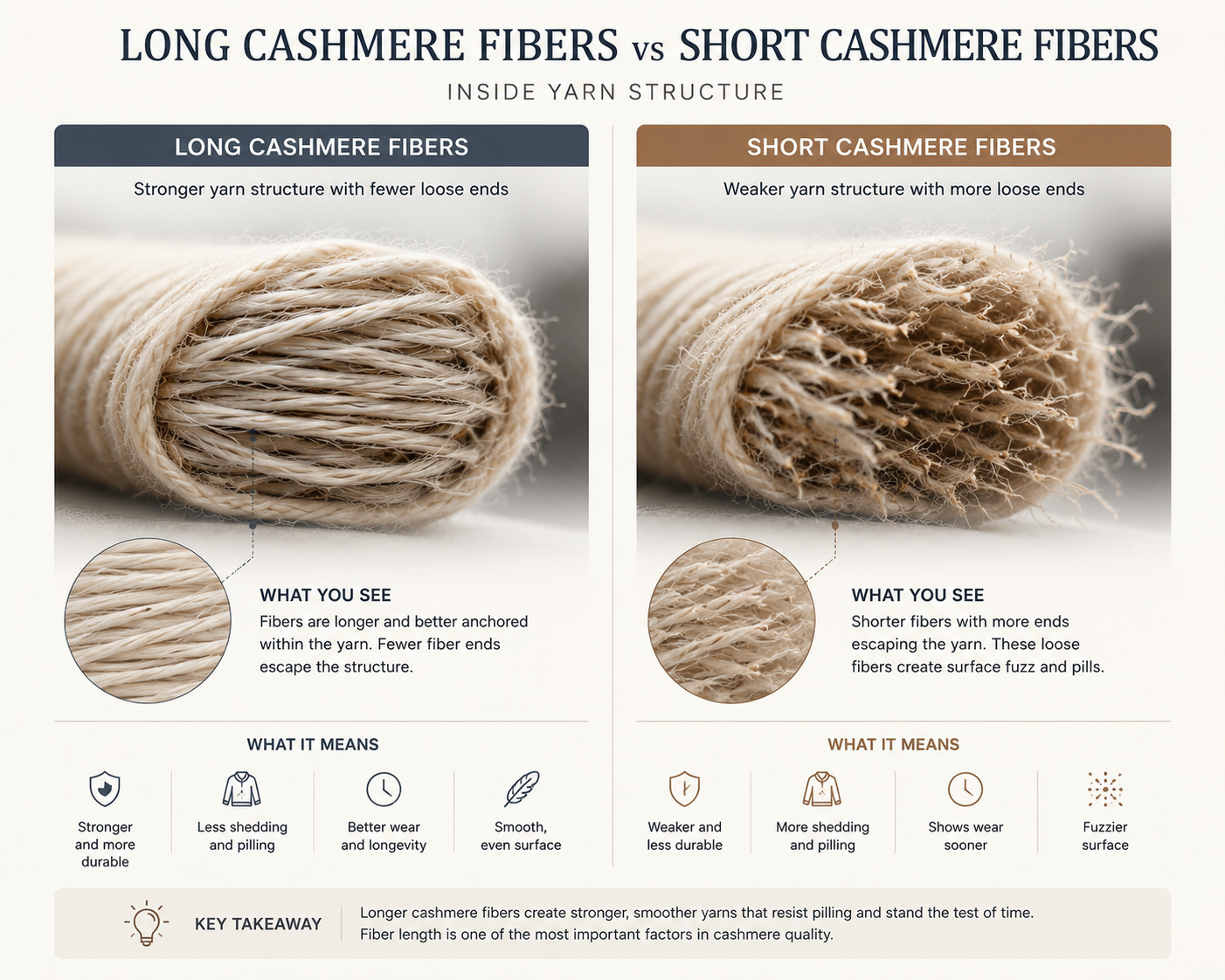
Longer cashmere fibers create stronger yarns because more of each fiber is locked into the yarn structure.
Shorter fibers have more loose ends that can escape and rub together.
Longer Fibers
✔ Less shedding
✔ Stronger yarn
✔ Reduced pilling
✔ Better durability
Shorter Fibers
✖ More loose ends
✖ Increased surface fuzz
✖ More frequent pilling
✖ Faster wear
Fiber Fineness Can Be Misleading
Many people assume the softest cashmere pills the most because the fibers are finer.
The reality is more nuanced.
High-grade cashmere is typically:
- Extremely fine
- Extremely soft
- Lightweight
- Comfortable against the skin
But softness alone doesn't determine durability.
A sweater made from fine, long fibers can be both incredibly soft and resistant to excessive pilling.
Problems arise when manufacturers use:
- Fine but short fibers
- Lower-quality fiber blends
- Recycled fiber content without proper processing
These materials often feel soft in a showroom but develop pilling much faster in daily wear.
Yarn Construction Matters Too
Fiber quality is only part of the story.
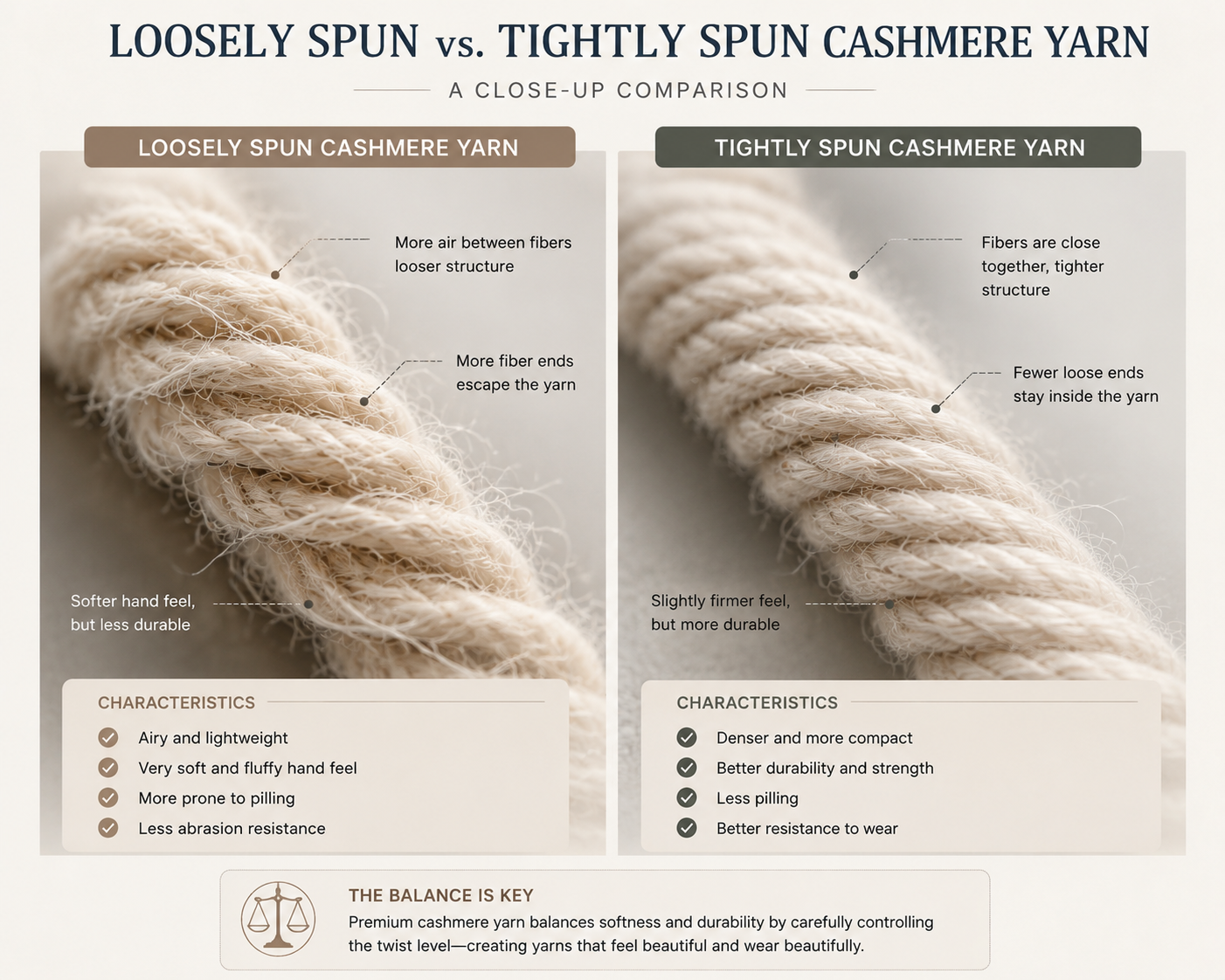
The way cashmere yarn is spun also influences pilling.
Loosely Spun Yarn
Pros:
- Very soft hand feel
- Airy and lightweight
Cons:
- More fibers escape
- Higher tendency to pill
Tightly Spun Yarn
Pros:
- Better durability
- Less pilling
Cons:
- Slightly firmer feel
Premium manufacturers carefully balance softness and durability by controlling yarn twist and knitting tension.
Why New Cashmere Often Pills First
One surprising fact:
The first few wears are often when pilling is most noticeable.
This happens because manufacturing leaves behind microscopic loose fibers on the garment surface.
During the first several wears:
- Loose fibers rise to the surface
- Friction gathers them together
- Pills form and are removed
After these excess fibers are gone, pilling usually decreases significantly.
This is why even luxury cashmere from renowned mills may experience a brief "break-in period."
How to Reduce Pilling
While pilling can never be eliminated entirely, proper care can dramatically reduce it.
Wash Less Frequently
Cashmere naturally resists odors and doesn't need washing after every wear.
Hand Wash or Use a Delicate Cycle
Use cold water and a gentle wool-safe detergent.
Dry Flat
Never hang wet cashmere.
Water weight can distort the knit and increase fiber stress.
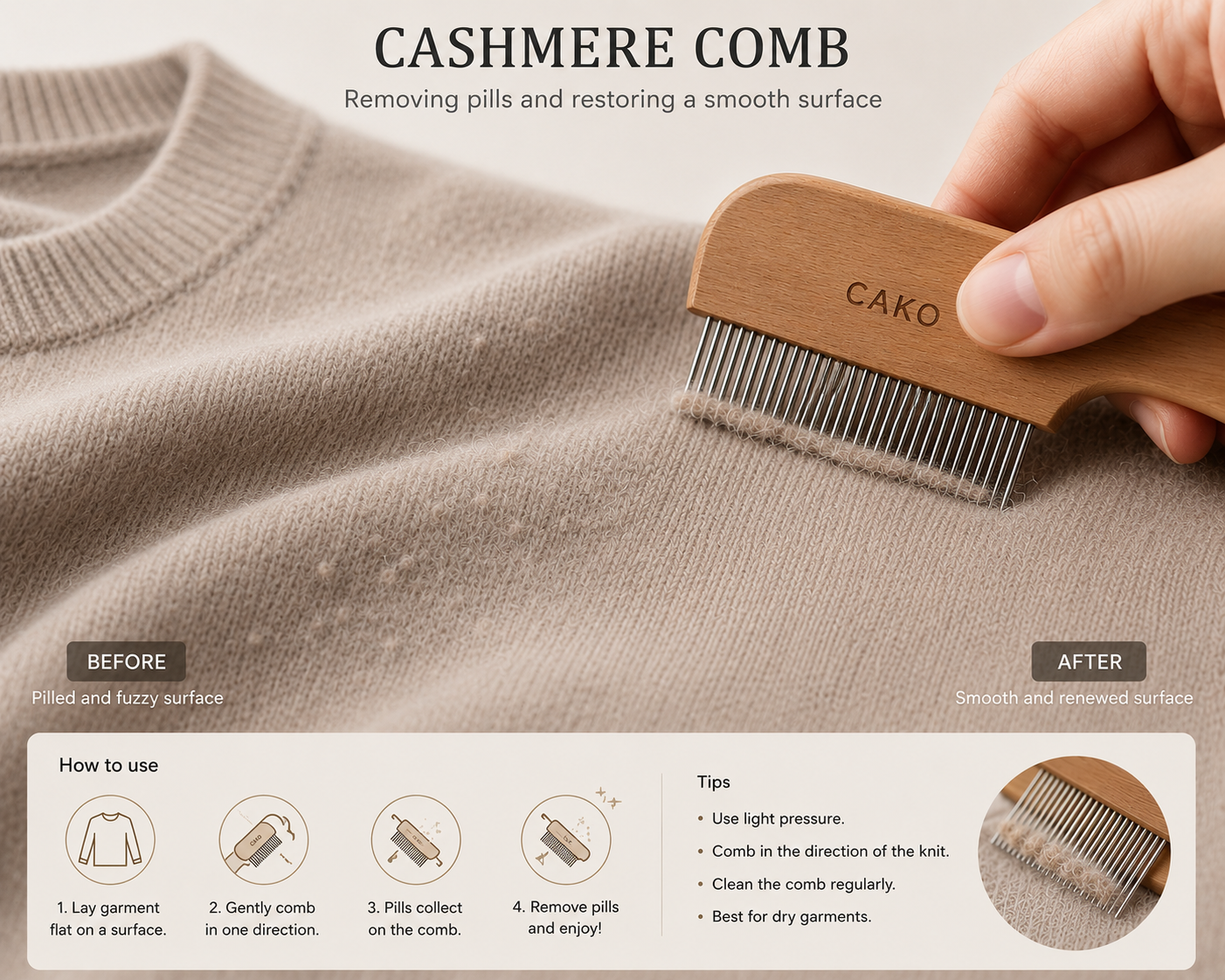
Remove Pills Properly
Use:
- A cashmere comb
- A fabric shaver designed for knitwear
Avoid pulling pills off by hand.
What to Look for When Buying Cashmere
Instead of focusing only on softness, look for:
✓ Long-staple cashmere fibers
✓ Transparent sourcing
✓ Dense, even knit structure
✓ Consistent fabric surface
✓ Reputable manufacturers
A sweater that feels slightly more structured today often looks better after years of wear than one that feels overly fluffy from day one.
A Note from CAKO
At CAKO, we believe great cashmere should balance softness, durability, and everyday wearability.
That's why we focus on carefully selected natural fibers and thoughtful construction—creating pieces that feel luxurious from the first wear while remaining wardrobe staples for years to come.

Final Thoughts
Pilling is a natural characteristic of cashmere, not necessarily a flaw.
The real question isn't whether a cashmere sweater pills—it's how well the fibers, yarn, and construction manage that process over time.
Understanding fiber length, yarn quality, and garment construction helps you separate truly premium cashmere from pieces that simply feel soft on the rack.
The best cashmere doesn't just feel luxurious on day one.
It continues to look beautiful season after season.


